

Project Publications
Books
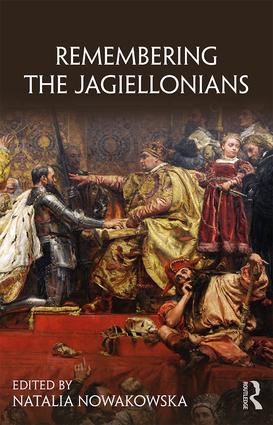
Remembering the Jagiellonians
Remembering the Jagiellonians is the first study of international memories of the Jagiellonians (1386–1596), one of the most powerful but lesser known royal dynasties of Renaissance Europe. It explores how the Jagiellonian dynasty has been remembered since the early modern period and assesses its role in the development of competing modern national identities across Central, Eastern and Northern Europe.
Offering a wide-ranging panoramic analysis of Jagiellonian memory over five hundred years, this book includes coverage of numerous present-day European countries, ranging from Bavaria to Kiev, and from Stockholm to the Adriatic. In doing so, it allows for a large, multi-way comparison of how one shared phenomenon has been, and still is, remembered in over a dozen neighbouring countries. Specialists in the history of Europe are brought together to apply the latest questions from memory theory and to combine them with debates from social science, medieval and early modern European history to engage in an international and interdisciplinary exploration into the relationship between memory and dynasty through time.
The first book to present the Jagiellonians' supranational history in English, Remembering the Jagiellonians opens key discussions about the regional memory of Europe and considers the ongoing role of the Jagiellonians in modern-day culture and politics. It is essential reading for students of early modern and late medieval Europe, ninteenth-century nationalism and the history of memory.
- Introduction: space, time & dynasty - Natalia Nowakowska
- Chapter 1: Our foreign traitors & redeemers: remembering Jagiellonians in Lithuania - Giedrė Mickūnaitė
- Chapter 2: An ambiguous golden age: Jagiellonians in Polish memory & historical consciousness - Natalia Nowakowska
- Chapter 3: The memory of the Jagiellonians in the Kingdom of Hungary, & in Hungarian & Slovak national narratives - Stanislava Kuzmová
- Chapter 4: Did Bohemian Jagiellonians exist? - Ilya Afanasyev
- Chapter 5: Remembering Jagiellonians in German-Speaking lands - Dušan Zupka
- Chapter 6: Remembering a past princess: Catherine Jagiellon & the construction of national narratives in Sweden & Finland - Susanna Niiranen
- Chapter 7: The Jagiellonians in Belarus: a gradual release of memory - Simon M. Lewis
- Chapter 8: The Jagiellonians in Ukrainian traditions - Tetiana Hoshko
- Chapter 9: The Jagiellonian Dynasty in Russian historiography & memory - Olga Kozubska-Andrusiv
Articles
“United in blood, divided by faith: Elena Ivanovna and Aleksander Jagiellon”
in Frictions and Failures. Cultural Encounters in Crisis, ed. Almut Bues, Deutsches Historisches Institut Warschau. Quellen und Studien (Wiesbaden: Harrassowitz, 2017), p. 181–200.
Rodinne stretnutia a dynasticke summity Jagelovcov koncom 15 a zaciatkom 16 storocia
in 'Prelomove Obdobie Dejin: Politika, Spolocnosi, Kultura v roku 1515', ed. Eva Frimmova (Bratislava, 2018).
What’s in a word? The Etymology & Historiography of Dynasty
Natalia Nowakowska - Journal of Global Intellectual History (in press, 2019).
Publications in Progress
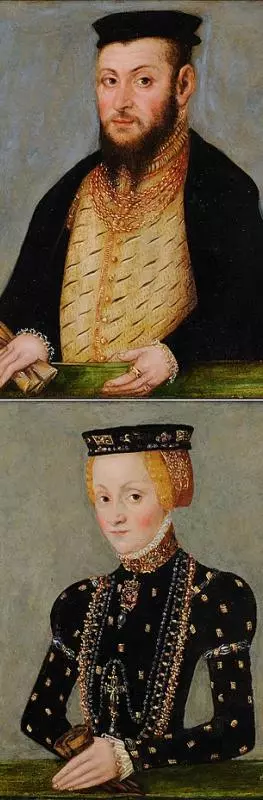
Dynasty in the Making: the Idea of the Jagiellonians (c.1370-1660)
By Natalia Nowakowska, Ilya Afanasyev, Giedrė Mickūnaitė, Stanislava Kuzmová, Susanna Niiranen & Dušan Zupka
This is a monograph of 120,000 words, collectively written by the PI and team members. It reconstructs the concept and languages of dynasty which existed among the Jagiellonians and their subjects c.1370-1670, the ‘invention’ of the Jagiellonian identity, and its implications for the study of dynasty in Renaissance Europe and beyond.

Lords of Another Europe: the Jagiellonians, 1377-1596
By Natalia Nowakowska
This monograph by the PI offers a new, trans-national and globalising history of the Jagiellonian dynasty over two centuries (c.1370-1600). The book sets the Jagiellonians within their wider European and Eurasian contexts for the first time.